
About Space Simulator Online
Space Simulator Online is an education product for Web. Free 3D Solar System, Milky Way & NASA Exoplanet Explorer.
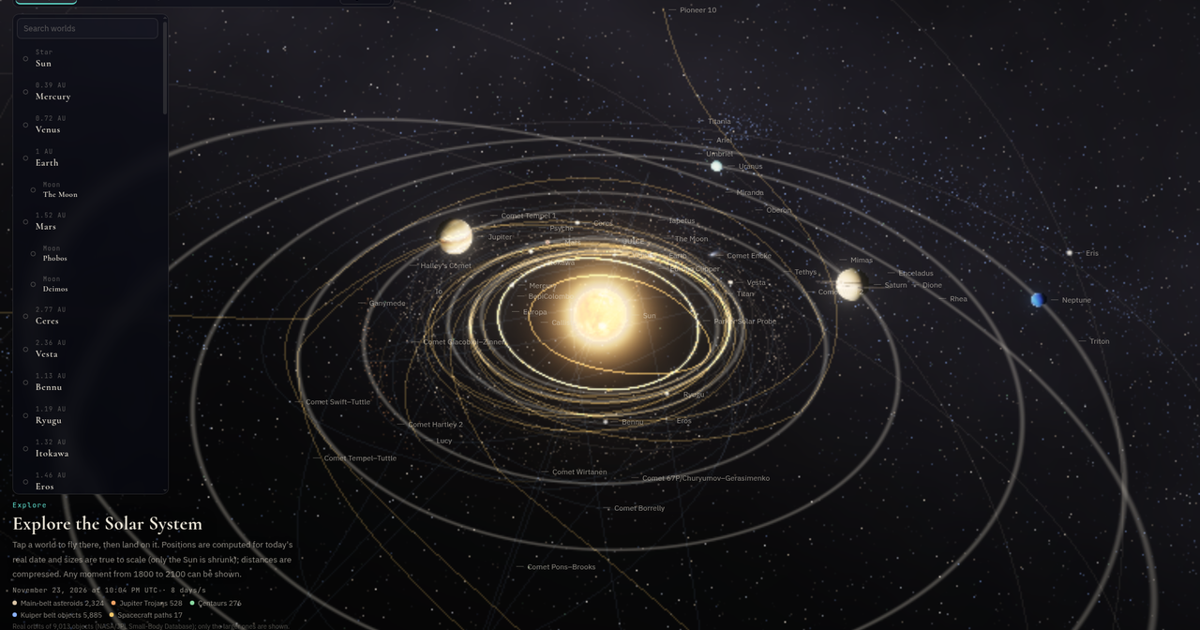
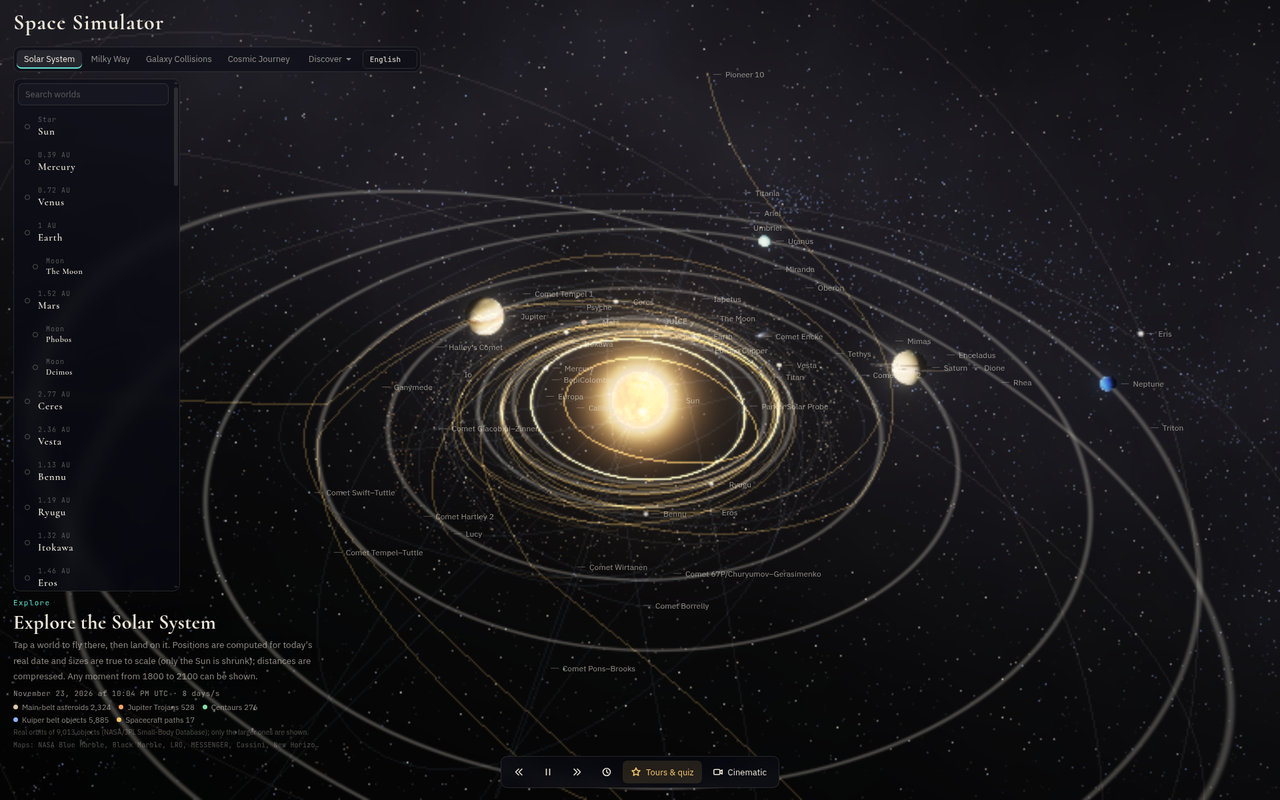
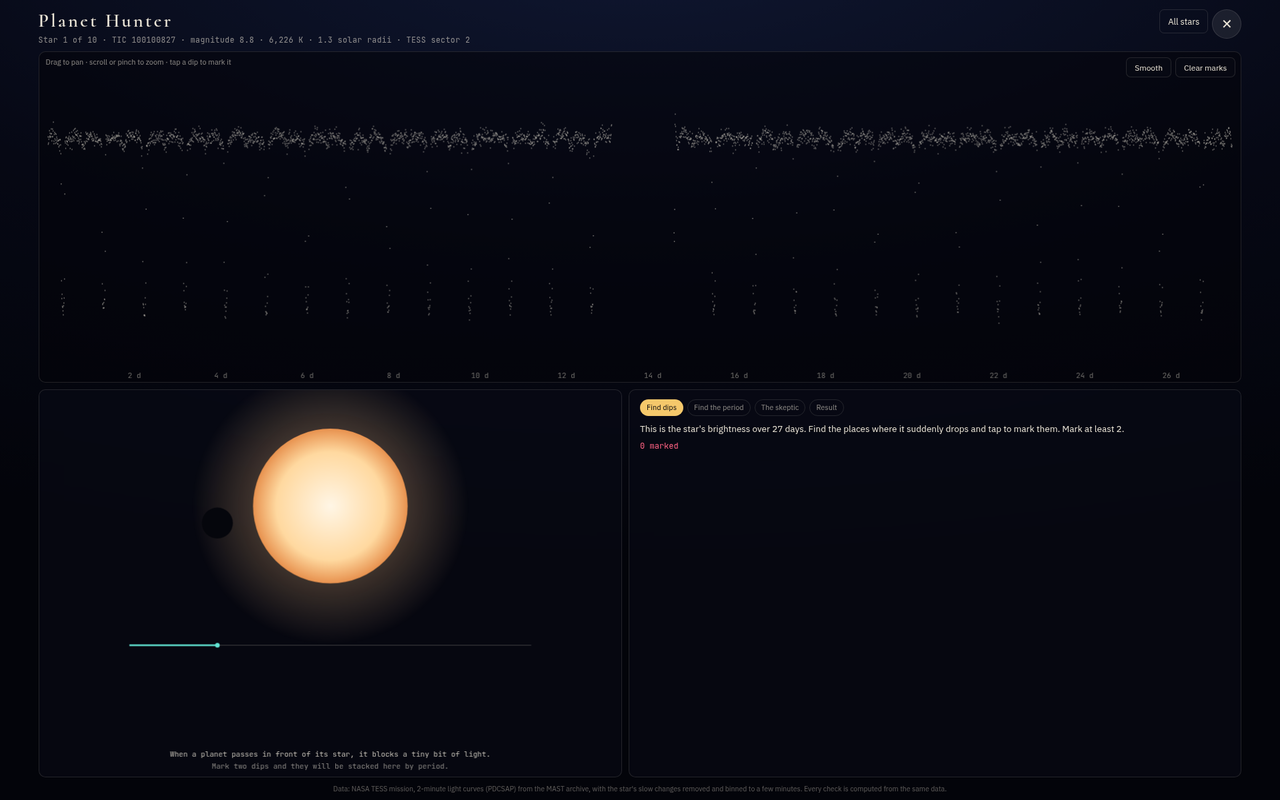
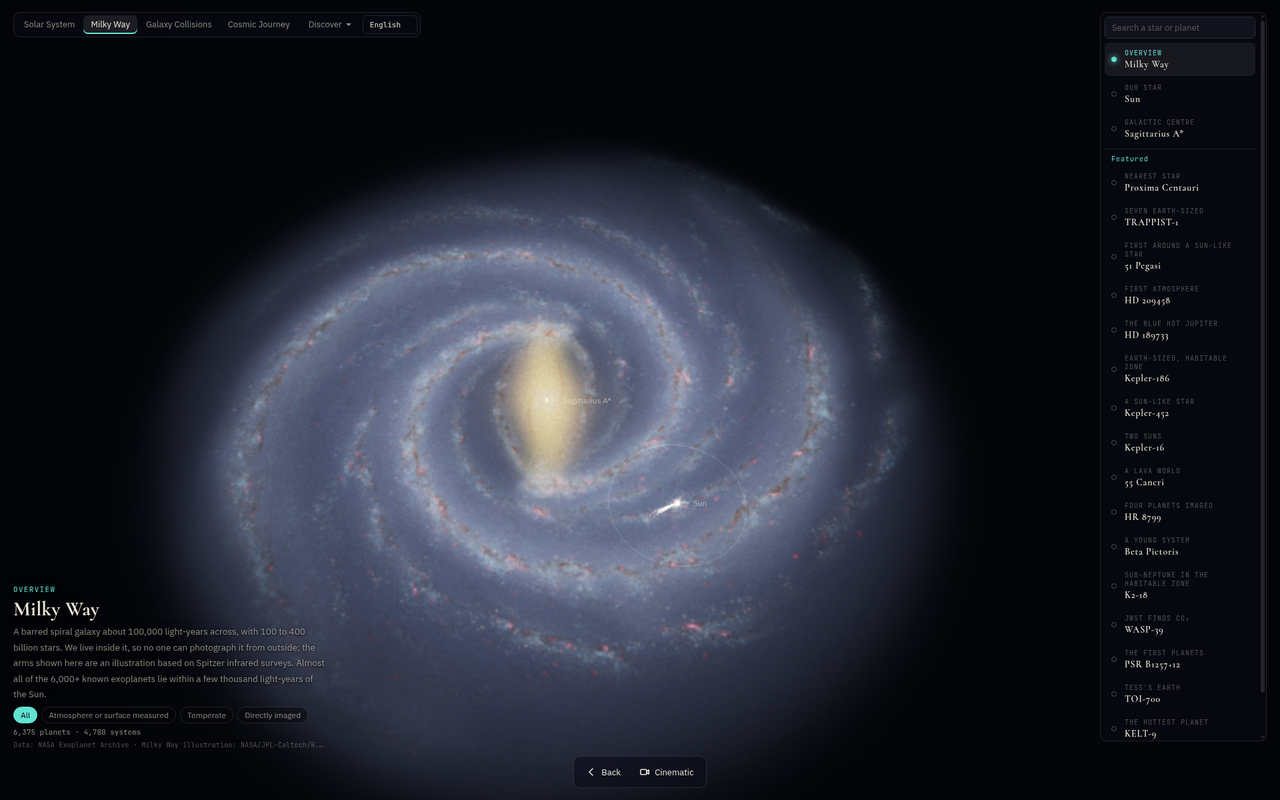
Space Simulator Online is a free, zero-install 3D astronomy and astrophysics simulator running at 60 FPS in your browser with raw WebGL2 and WebGPU. Explore real-time planetary and spacecraft orbits from NASA/JPL Horizons, a night-sky planetarium with 110 Messier deep-sky objects, a 3D star map of 6,000+ confirmed NASA exoplanets, an interactive TESS transit light-curve lab, WebGPU N-body galaxy collisions, and LIGO gravitational-wave visualizations. Available in 10 languages with no login or ads.
Students, teachers and astronomy enthusiasts who want to explore space in 3D in the browser.
At a glance
- Website
- spacesimulator.online
- Category
- Education
- Pricing
- Free
- Founded in
- 2026
- Platforms
- Web
- Founders
- Run Cheng
- Ownership
- Unclaimed ·
- Launched
- 26 Nov 2026
Questions about Space Simulator Online
Answers from spacesimulator.online, Space Simulator Online's own website.
What is Space Simulator Online?
3D Space Simulator Online built on real NASA data: fly through the Solar System and Milky Way, build a solar system, watch galaxy collisions, and hunt exoplanets in your browser.
Is this Solar System simulator accurate?
Yes for positions and sizes: the planets are placed where NASA JPL's orbit data says they are on the date shown, and the maps are real spacecraft images. Distances can be shown to scale or compressed so the planets fit on screen.
How far is each planet from the Sun?
On average Mercury is 0.39 AU, Venus 0.72, Earth 1, Mars 1.52, Jupiter 5.2, Saturn 9.5, Uranus 19.2 and Neptune 30.1 AU. One AU is about 150 million km.
Which planet has the most moons?
Saturn, followed by Jupiter. Both counts keep growing as new small moons are found.
How long does it take light from the Sun to reach Earth?
About 8 minutes 20 seconds. It takes about 4 hours to reach Neptune.
Can I see where the planets are today?
Yes. The Solar System opens at today's date, and the Now & Here page shows which planets are in your sky tonight.
How big is the Solar System?
If the Sun were a ball 1 metre across, Earth would be a peppercorn about 107 metres away and Neptune a small marble more than 3 km away. The nearest star would be another Sun-sized ball almost 30,000 km away, more than twice the width of Earth. That emptiness is why the simulator lets you switch between true distances and a compressed view where every planet fits on screen.
What can you do with Space Simulator Online?
Space Simulator Online's website highlights the planets at a glance, what you can do here, where the data comes from, frequently asked questions and explore further.
Comments 1
From members who've used Space Simulator Online. Be specific and kind; it helps people decide and helps the makers build.
Reading your listing, this is the line that stayed with me: “Available in 10 languages with no login or ads”. It says a lot about the problem you chose for students, teachers and astronomy enthusiasts who want to exp. My one piece of advice: make the first minute prove the value before you ask people for anything. As you get started here, what do you most want the first people using Space Simulator Online to notice?
Report