
39measurements on your rendered product
Real browser · desktop and mobile · every run
A 360° investigation of your product, from first impression and onboarding to the core flow and paywall. Every finding is backed by a measurement or pinned to the screen it came from, then signed off by an analyst. Start free, go deep with Pro.
Investigations unlock once your product is listed and live on Science of Apps. Listing is free.
Six short steps: name, story, details, logo and media, and the founders behind it.
Pass review, verify you own the product, and publish your listing.
A free baseline diagnosis runs as you go live. Then request a free investigation or order Pro.
22 areas, from the first search result to the last settings toggle, re-cut for your category. Fintech gets KYC and money movement, AI products get prompt and output trust, games get first-time play and the store. Anything unique to your product, we add.
First impression, from search result to landing page.
Makes the product findable on Google, AI assistants and social feeds.
Turns a stranger into someone who understands the product and takes the first step.
Makes the cost and the choice of plan obvious.
Earns the right to people's data and money.
Responds before attention drifts.
The few minutes that decide whether people stay.
Creates an account with the least effort and the most trust.
Lets returning users back in quickly and recovers them when they are stuck.
Delivers the first moment of value before attention runs out.
The everyday job your product is hired for.
Answers “what should I do now?” for new and returning users.
The job users hire the product for, end to end.
Turns data into decisions without making people decode it.
Helps people find things without knowing your structure.
Speaks the user's language, consistently.
Keeps people oriented when there is nothing, something slow, or something wrong.
Where value turns into revenue, or doubt.
Explains what paying unlocks and earns the upgrade honestly.
Takes money without doubt, surprise or friction.
What brings people back and keeps them in control.
Brings people back for the right reasons, at the right time.
Lets people see and control who they are in the product.
Gives control without becoming a maze.
Gets stuck users unstuck.
Qualities judged on every screen.
Works for everyone, including people with disabilities, and reduces legal risk.
One coherent visual language that feels trustworthy.
Everything that can be measured is measured, on your real product in a real browser. Everything that needs judgement gets an expert, with a checklist built for that screen.
Real browser · desktop and mobile · every run
Grounded in the 60 Laws of UX and Nielsen's heuristics
Automation measures what can be measured. Everything behind your login, from onboarding and home to flows and paywalls, is judged against expert checklists, and every Pro finding is reviewed by a Science of Apps analyst before you see it.
Every finding is pinned to its screen, cites the principle behind it and comes with a next step. Pick a verdict to see an example.
Working well and aligned with best practice.
Works, but could be clearer, faster or more consistent. Usually a low-effort fix with visible impact.
Disrupts the experience or breaks an established principle.
Blocks users, loses revenue or creates legal or accessibility risk.
Not a defect. Advice from Science of Apps in your investigation: what we would add or change to unlock more value.
Every finding cites the law behind it, so your team learns the why, not just the what. A few you'll meet in your report:
The time it takes to make a decision increases with the number and complexity of the choices available.
The time it takes to reach a target depends on its distance and size: bigger, closer targets are faster and easier to hit.
Users spend most of their time in other products, so they expect yours to work the same way as the apps and sites they already know.
People can hold only a limited number of items in short-term memory — famously about seven, plus or minus two — so information should be organized into small chunks.
People judge an experience mostly by how they felt at its most intense moment and at its end, not by the average of every moment.
Every system has a certain amount of complexity that can't be removed — only moved — so the product should absorb it instead of passing it to users.
No subscriptions. Pro is priced upfront from your stage, scope and region, so what you see is what you pay.
Public profile, custom link, earned badges and fair discovery. Free forever.
Unlocks when your listing goes live: landing page, discoverability and speed, as a branded PDF.
Every area of your product, analyst sign-off and a prioritised roadmap.
Once your listing is live. Going live unlocks a free baseline diagnosis of your public pages, and you can then request a free investigation or order a Pro investigation from your founder dashboard.
A 360-degree heuristic evaluation and UX audit of your live product. Science of Apps renders it in a real browser on desktop and mobile, measures it, and evaluates every area people meet, from landing page and onboarding to paywall and settings. Every finding is pinned to evidence and grounded in 60 Laws of UX, Nielsen's heuristics and WCAG 2.2.
Upfront, by tier, adjusted to what people in your country can pay. In the US: Launch from $199, Growth from $749, Scale from $1,999 and Enterprise from $3,999; in India: from ₹499. You see the exact figure in your currency, for your platforms and scope, before you pay.
Only your team. Reports are private by default and never affect your listing's ranking. You can choose to publish a Science of Apps card that shows your score band and verified strengths, never your weaknesses.
By Sushant Singh, founder of Science of Apps. Each comes in a printable and a dark edition.
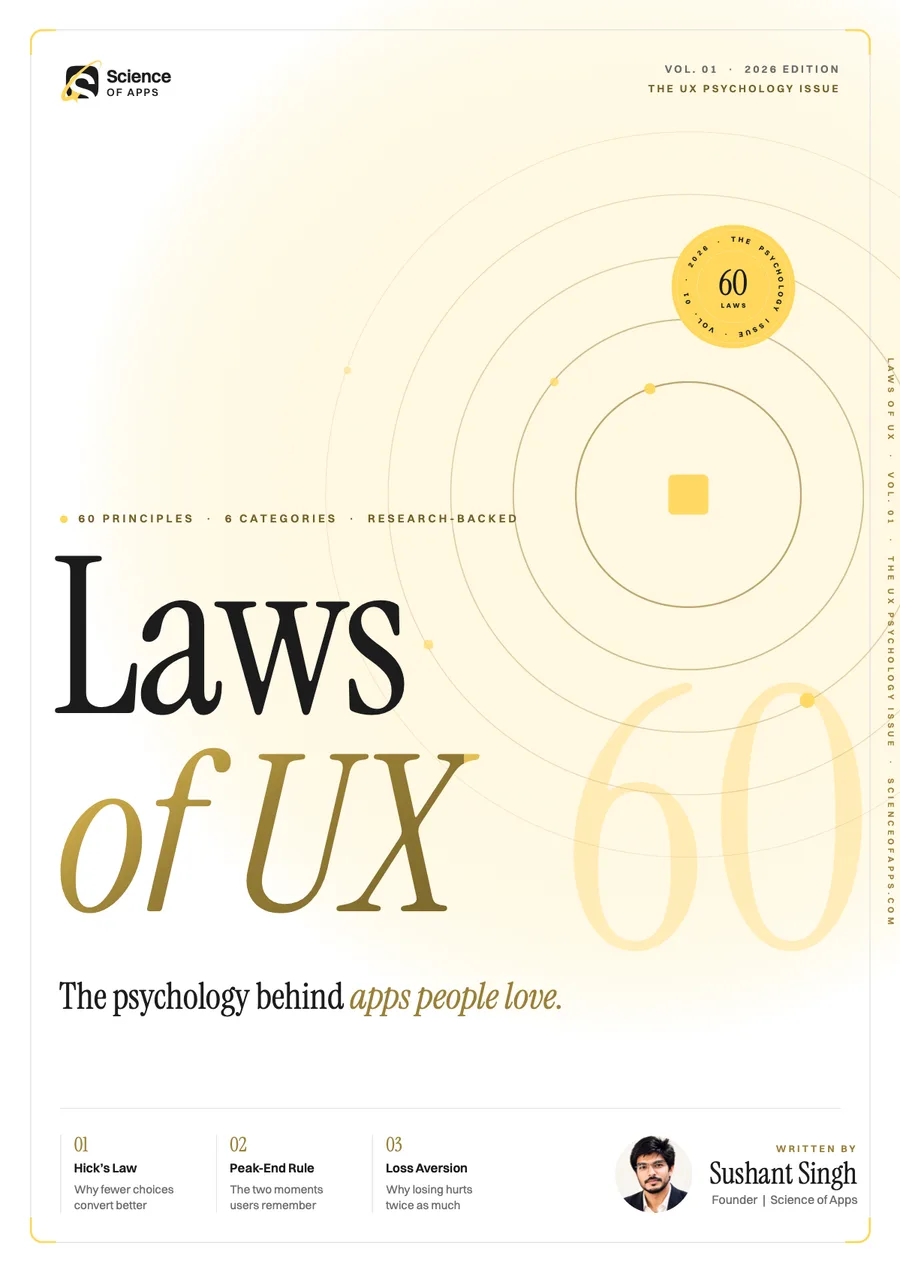
60 UX psychology principles in six categories, with examples, do's and don'ts and a one-spread cheat sheet.
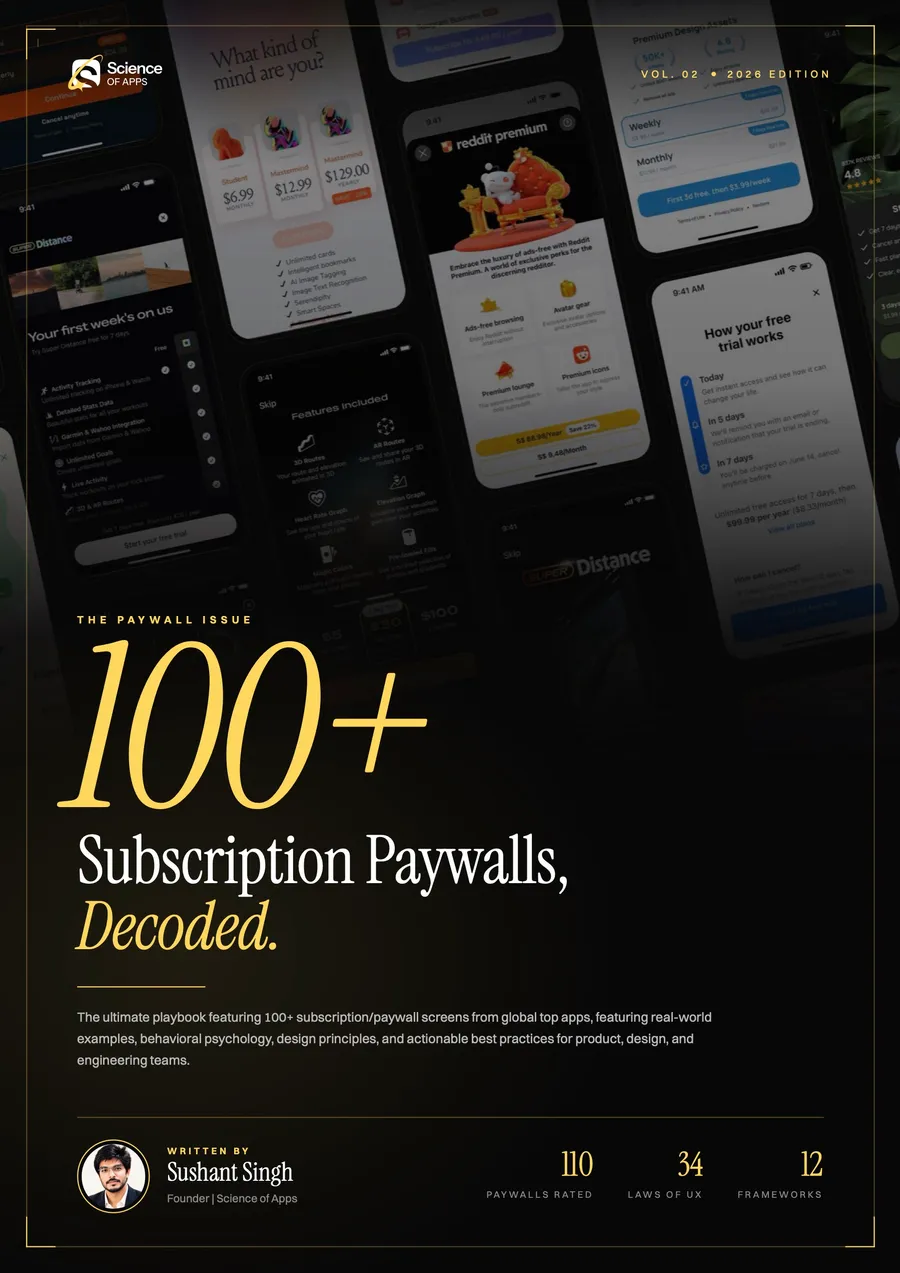
110 real paywalls from top apps, rated out of 5, with the Laws of UX at work, 12 frameworks and a pre-launch checklist.
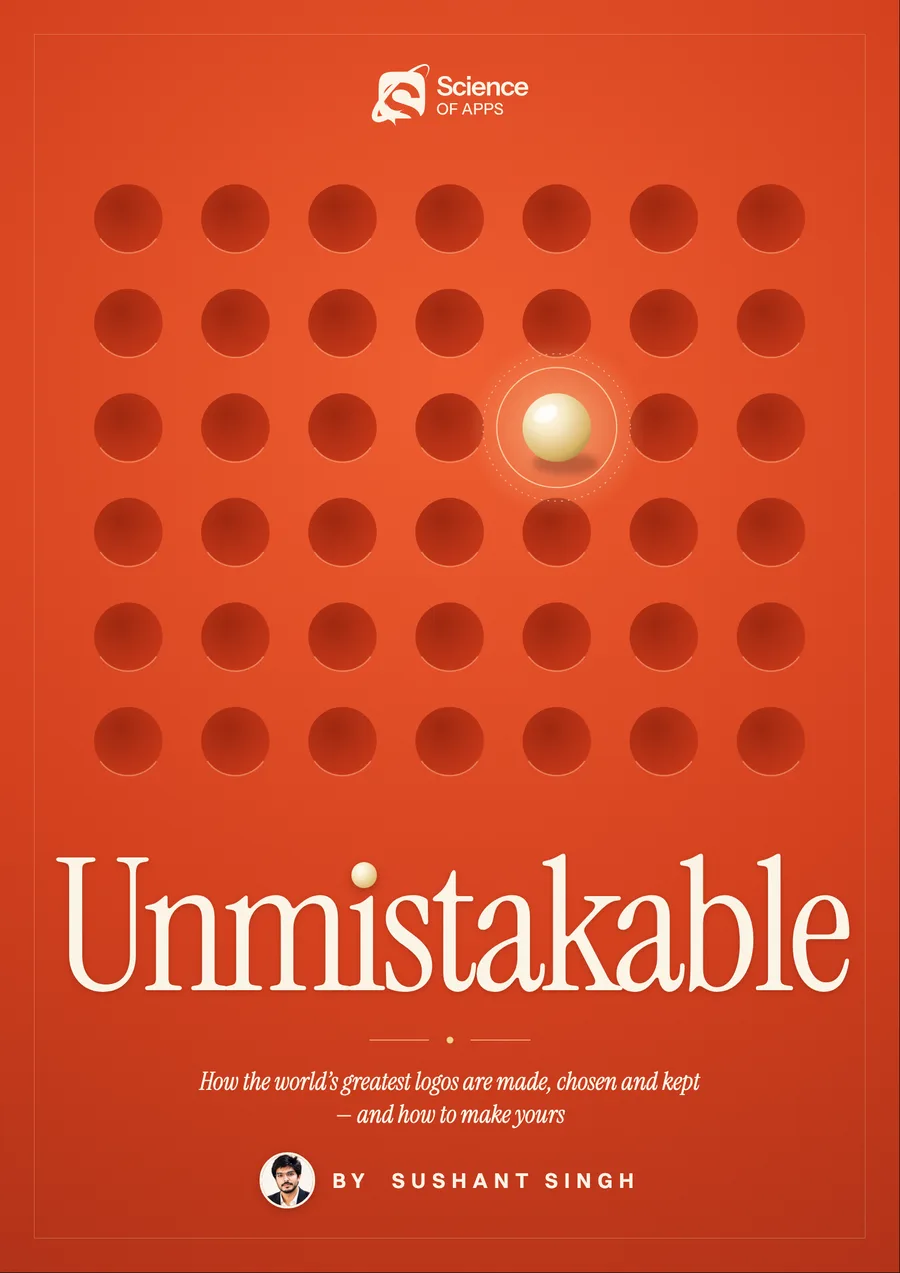
How the world's greatest logos are made, chosen and kept. 98 lessons and 19 brand stories, from Nike to FedEx.