

About Scientific Figure AI
Scientific Figure AI is an AI product. Turn text, sketches, and abstracts into scientific illustrations, flowcharts, and graphical abstracts with editable labels.
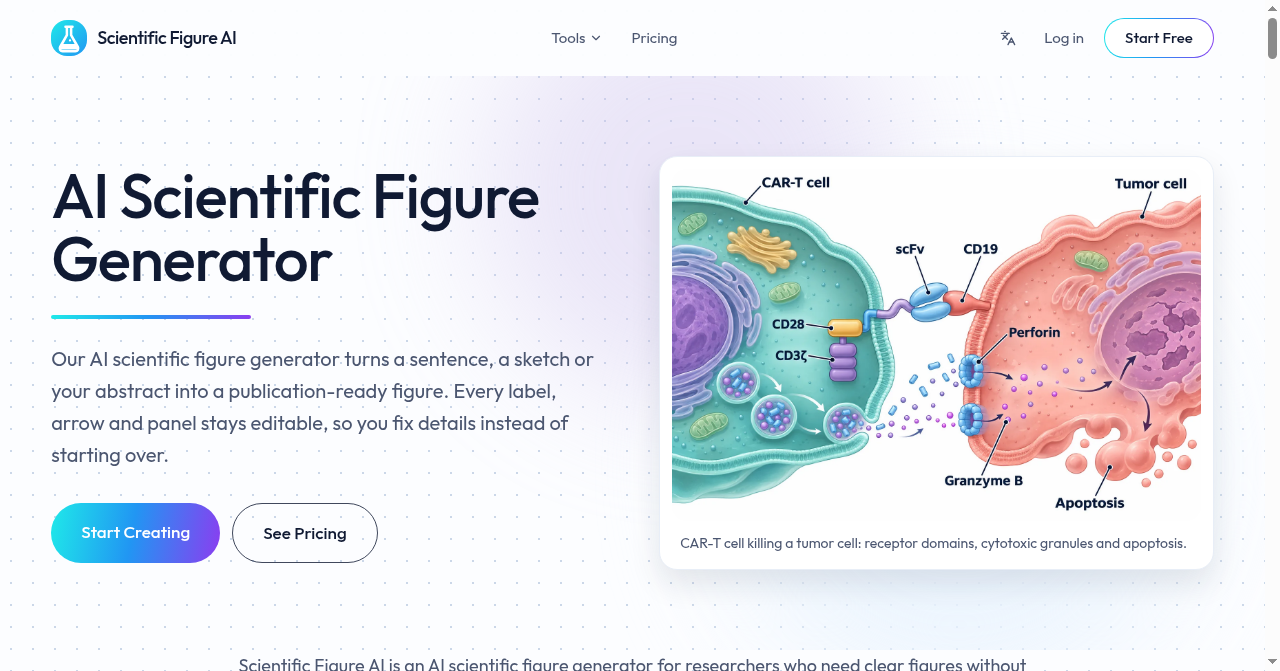
Scientific Figure AI helps researchers turn text descriptions, reference sketches and abstracts into scientific illustrations, flowcharts and graphical abstracts. Review a proposed figure plan, then refine labels, arrows, colors and layouts in the browser. Supported exports include PNG, JPG, SVG with editable vector labels over the illustration, and PowerPoint with editable text and shapes. Built-in free tools cover PRISMA 2020 flow diagrams, phylogenetic trees, poster sizing and downloadable research poster templates. AI generation uses credits, with a free account allowance and optional paid plans or credit packs.
Draft a clear scientific figure from a written brief or sketch and revise the labels and layout before exporting it for a paper or presentation.
Researchers, graduate students, and educators who create figures for papers, posters, and presentations.
At a glance
- Website
- scientificfigureai.com
- Category
- AI Products
- Pricing
- Freemium
- Stage
- Bootstrapped
- Based in
- Singapore
- Founded in
- 2026
- Ownership
- Unclaimed ·
- Launched
- 23 Nov 2026
Questions about Scientific Figure AI
What is Scientific Figure AI?
Scientific Figure AI is an AI product. Turn text, sketches, and abstracts into scientific illustrations, flowcharts, and graphical abstracts with editable labels. Scientific Figure AI helps researchers turn text descriptions, reference sketches and abstracts into scientific illustrations, flowcharts and graphical abstracts.
What problem does Scientific Figure AI solve?
Draft a clear scientific figure from a written brief or sketch and revise the labels and layout before exporting it for a paper or presentation.
Who is Scientific Figure AI for?
Researchers, graduate students, and educators who create figures for papers, posters, and presentations.
Comments 1
From members who've used Scientific Figure AI. Be specific and kind; it helps people decide and helps the makers build.
Reading your listing, this is the line that stayed with me: “Review a proposed figure plan, then refine labels, arrows, colors and layouts in the browser”. It says a lot about the problem you chose for researchers, graduate students, and educators who create fig. My one piece of advice: before adding anything new, watch five people use it for the first time and fix the first place they hesitate. As you get started here, what have the first people using Scientific Figure AI taught you that you didn't expect?
Report